Revolutionizing Early Childhood Educator Training with VR and AI
In a groundbreaking partnership between Wind Sun Sky and Langara College, and funded in part from the Government of Canada’s Early Learning and Child Care – Innovation Program, we are we are bringing together the power of animated storytelling and immersive educational technology. This collaboration connects cutting-edge immersive Ed-Tech including, virtual reality (VR), natural language processing (NLP), and customized large language models (LLMs), to explore how immersive experiences can support the next generation of students and educators.
From Animated Characters to Emotionally Intelligent Avatars
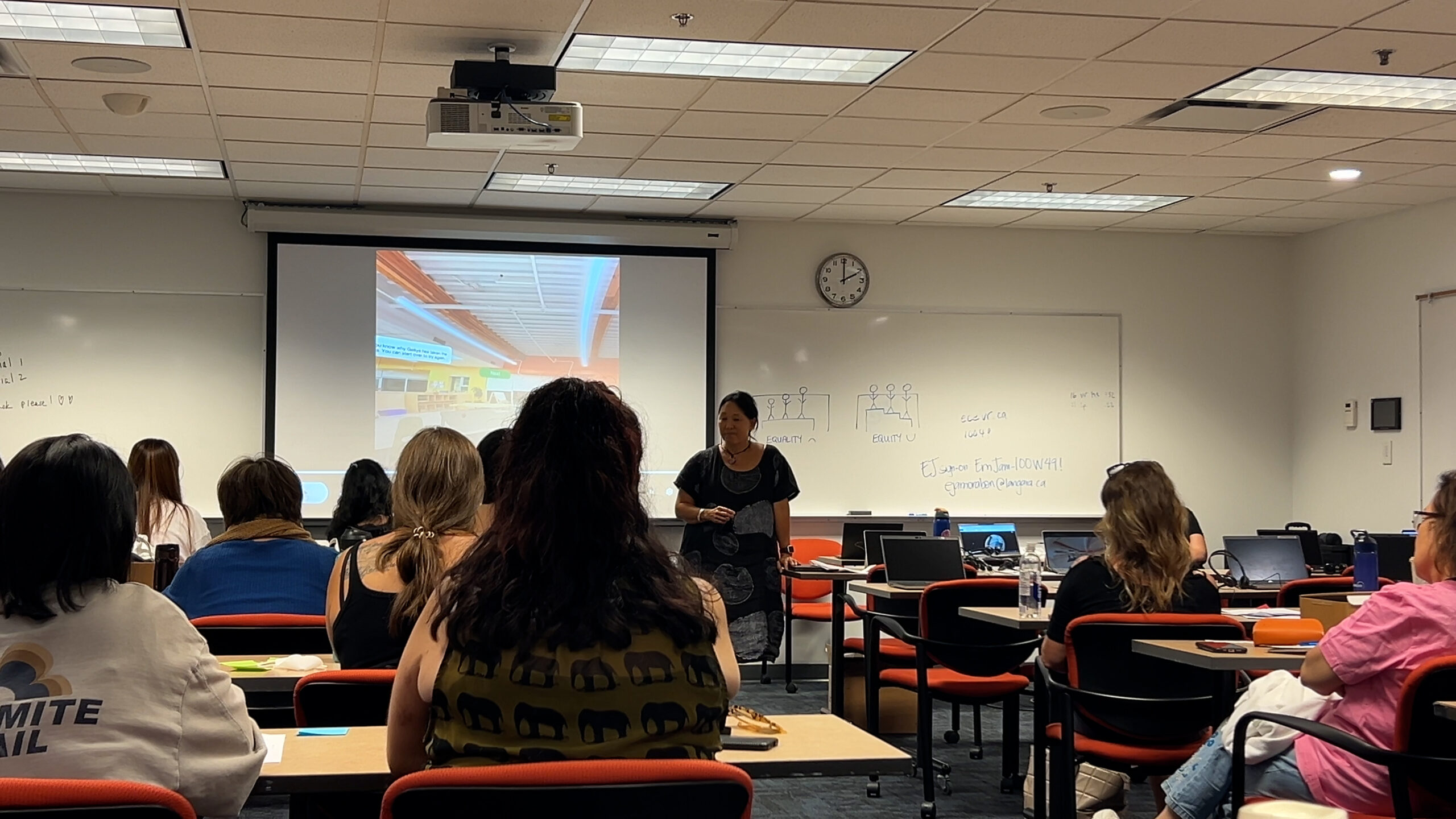
Wind Sun Sky is working hand-in-hand with Langara’s Early Childhood Education (ECE) students and faculty led by Carolyn Wing, to create an interactive first of its kind training tool. A research project harnessing the tools of AI, this project is being developed to enhance ECE students’ active learning.
When studying to become educators of young children, ECE students are learning to put theory into practice. By offering realistic, high-stakes interactive VR classroom scenarios, this project gives students opportunities to build confidence and core skills alongside their classroom and practicum experiences.
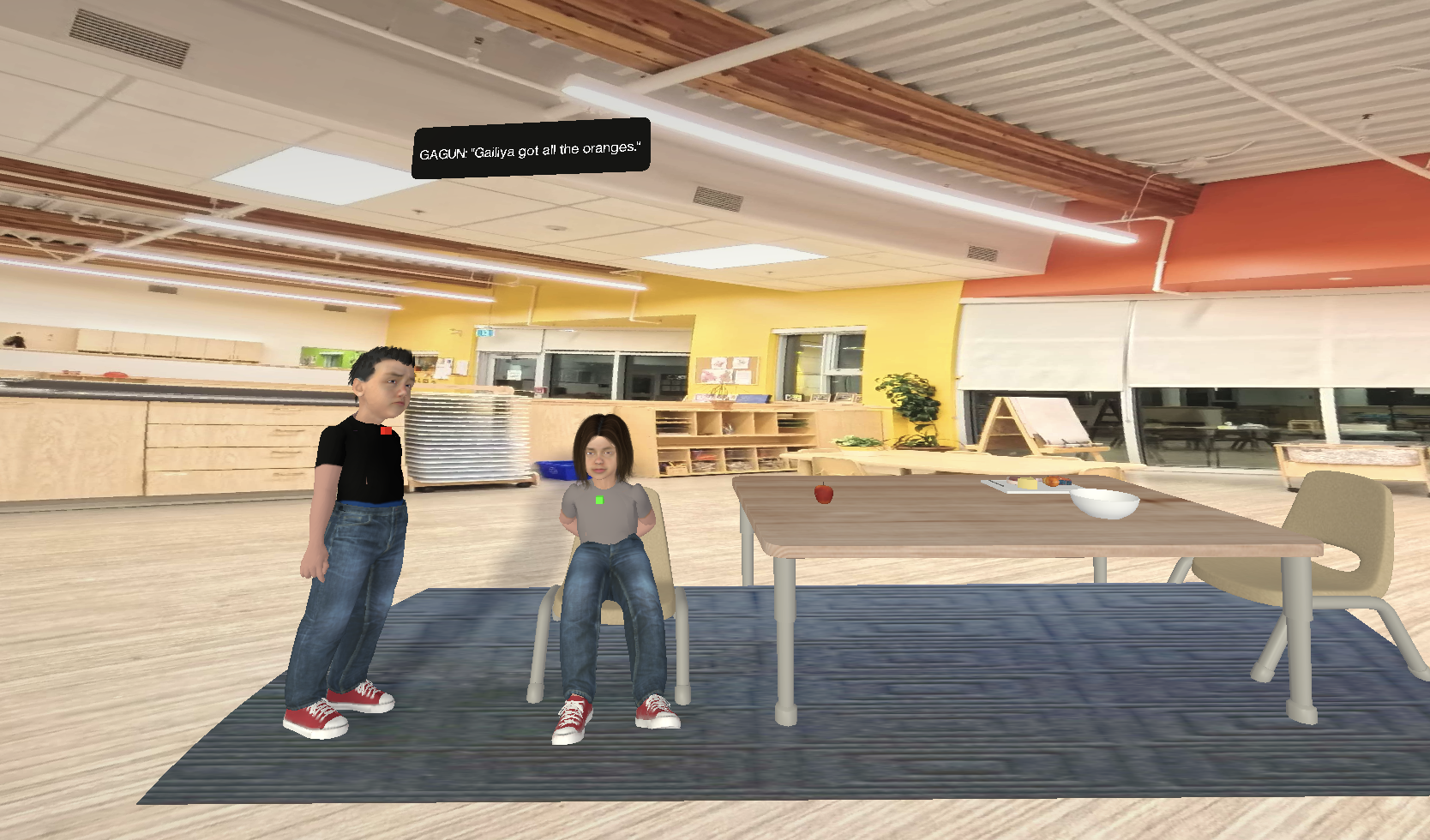
In the virtual reality experience being developed, students can step into the role of an educator and interact with 3D animated child avatars that simulate real-life emotions. From joy and curiosity to frustration and withdrawal. Each interaction is an opportunity to learn by doing, helping students practice communication, empathy, and problem-solving in a responsive, emotionally rich environment.
Why It Matters: Immersive EdTech Works
Immersive learning isn’t just futuristic—it’s effective. Studies show that students retain up to 75% more when learning through VR compared to traditional classroom methods (PwC, 2020). It’s already standard practice for training surgeons, pilots, and engineers, so why not early childhood educators.
For ECE students, this is a powerful opportunity to rehearse real-world scenarios without real- world consequences. They can make mistakes, adapt, and grow in a supportive environment designed to build not just skills, but empathy.
The Tech Behind it all
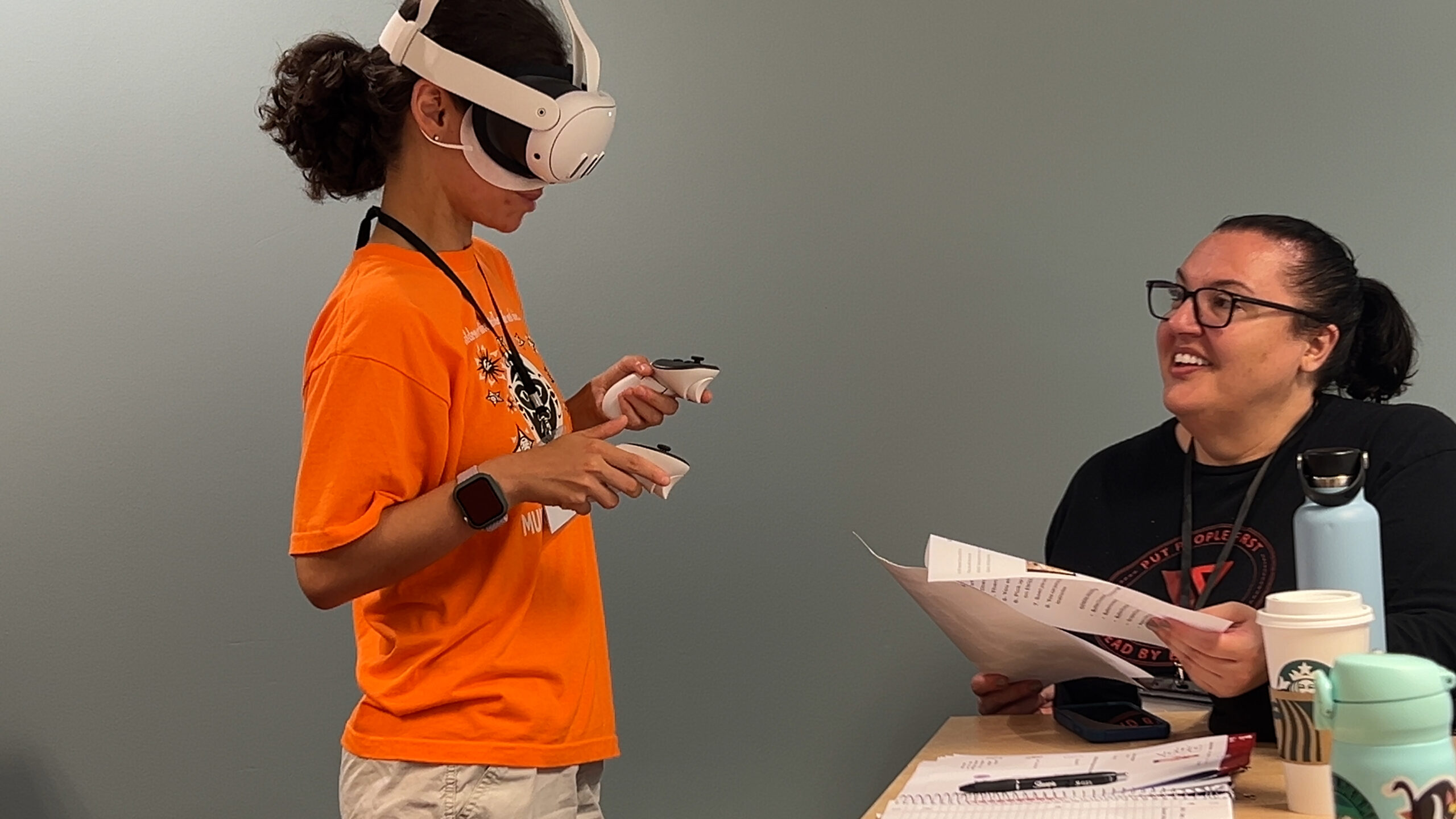
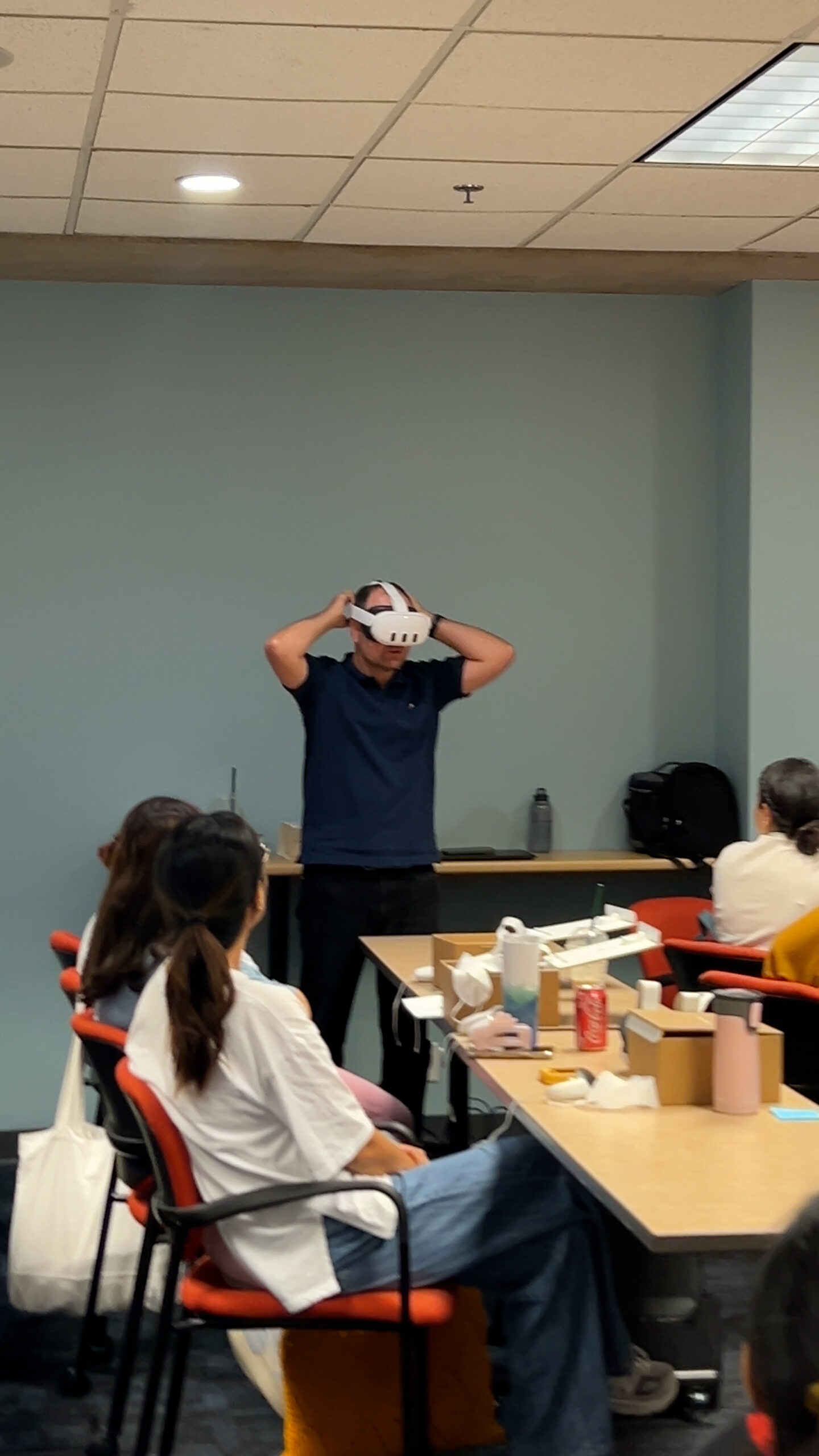
The hardware we’re using is the Meta Quest 3 headset to deliver an affordable and scalable VR experience. Under the hood, it’s powered by a secure, closed-loop version of an LLM— think of it as a curriculum-guided, Langara-trained mini ChatGPT—and a natural language processor trained on thousands of teacher-approved responses. Students can engage in both live and text-based simulations, either in VR or via desktop, making the system accessible and adaptable to various learning environments.
The tool also integrates voice recognition and gesture tracking, allowing students to communicate with virtual children in real time.
Responses are immediate and emotionally reactive. Say the right thing, and the avatar may self-regulate. Miss an emotional cue, and the child may visibly and audibly emotionally withdraw or escalate, just like in real life.
Learning with the CLEAR Framework
To guide student responses, the system incorporates Langara’s CLEAR framework of conflict resolution for children: Control, Listen, Explore, Agree, Resume. This structured approach helps students stay calm under pressure, listen actively, and support conflict resolution skill development in the children in their centre.
Students are prompted to answer questions such as “What was the child feeling?” and “What CLEAR step was needed here?”—encouraging critical thinking, emotional insight, and accountability for their decisions.
Exploring intercultural differences is an objective of the project as well. Understanding the possible reason behind a child’s behavior is being explored. For example, perhaps a specific cultural teaching has been shared with a child that informs their behaviour. These elements are designed to strengthen awareness of anti-bias principles, anti-racism, and the ongoing impacts of colonization all which are central to the program’s goals.

A Global Effort, With Local Impact
Funded in part by the Government of Canada’s Early Learning and Child Care – Innovation Program, the project is still in R&D—but already proving to be a collaborative international effort, with teams from Vietnam to the U.S. working on LLM training, QA, and implementation.
At its heart, this project is a marriage of two skillsets: the creative and technical storytelling power of Wind Sun Sky, and the deep pedagogical insight of Langara’s Early Childhood Education department. Together, we’re shaping a new kind of learning—one that’s human, immersive, and deeply future-facing.
Right now, we’re deep in the build-test-repeat cycle. Every time a student gets stuck or says something the system doesn’t quite catch, we’re adapting. Iterating. Getting better.
The long-term vision? A modular training system that could expand beyond early childhood education to other disciplines—anywhere empathy, communication, and emotional intelligence matter.
This isn’t about replacing teachers. It’s about equipping them. Helping future educators build confidence and skill before they enter the classroom. It’s about using the best of entertainment and technology to solve real-world challenges.
And it’s only the beginning.