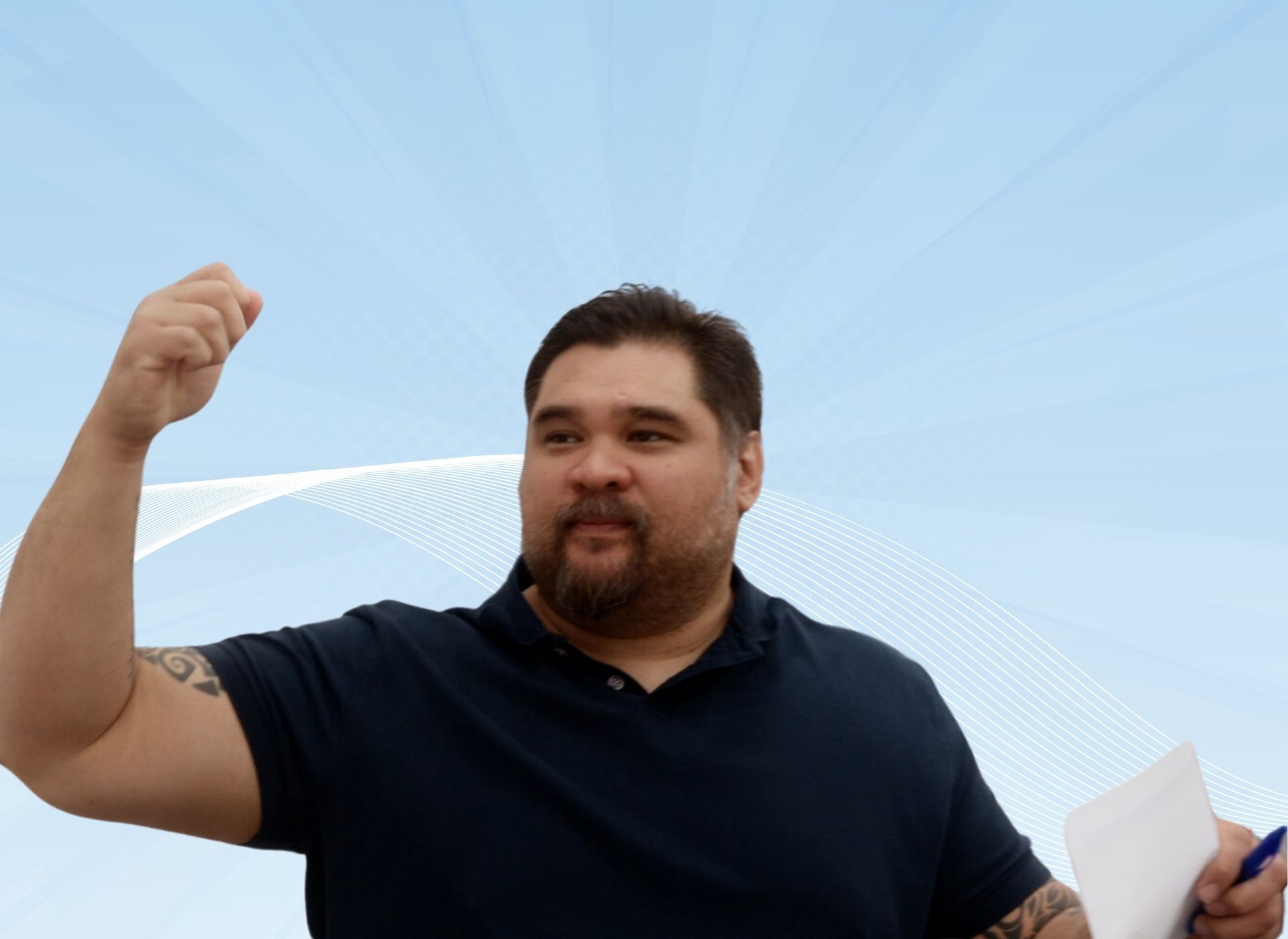
A veteran artist behind The Hollow, Nerds and Monsters, and Kid vs. Kat. Josh Mepham is now part of the Wind Sun Sky Entertainment creative team in the role of Studio Art Director.
Josh first joined WSS to support the visual development of Camp McCarty – our digital universe we are building with The McCarty family. A year later, Josh has become an essential part of the studio bringing in fresh perspectives and lots of color to the many projects that are in the works.
We took the opportunity to speak to him about his path as a designer – what sparks his creativity and the methods he uses to create memorable characters.
Q1: What inspired you to become a character designer and what drives your creativity?
I didn’t grow up thinking, “I’m going to be a character designer.” I didn’t even know that was a job!
I just drew. Constantly. Faces in the margins of my schoolbooks (which got me in trouble more than once). And I loved designing Dungeons & Dragons characters for my friends and I.
Somewhere along the way, I realized what I loved most wasn’t just drawing, it was inventing characters.
When I start designing a character, I read the brief given to me by a producer or director and sit with it to understand who this person is before I touch a pencil. What are they like emotionally? What kind of world do they live? Are they confident? Broken? Funny? Dangerous?
Then I jump into exploration mode, creating rough sketches and I mean rough. I usually start with the face. Sometimes it clicks right away. Most of the time it doesn’t. It takes a lot of bad drawings before something feels right, and I’ve learned not to be precious about that. The rough work is part of the process.
When I design original characters, I always come back to a few anchors:
– What’s the tone of the property?
– Who is the audience?
– What kind of world does this character exist in?
What is the biggest lesson I’ve learned over the years? Work rough. Don’t chase perfection in the first pass. The magic happens in the iteration refining, exaggerating, simplifying and slowly discovering who the character wants to be within the imaginary universe it exists in.
Q2: This is a common question in character design. Should you colour characters at the draft phase?
You probably shouldn’t. But I almost always do!
I know the “proper” workflow is to solve the design in black and white first, lock in the silhouette, make sure it works structurally. And I do believe that’s important. But with the tools we have now, adding colour is so fast that I find it hard not to.
The moment I drop colour onto a character, something shifts. The images stop feeling like construction and start feeling like someone. It gives life to the drawing. It helps me and everyone else see who they really are.
There’s also a practical side to it. When you’re pitching a character or presenting to a show runner, colour helps sell the idea. It communicates tone instantly and paints a clearer picture of how that character will live on screen. It’s not just aesthetic, it’s clarity.
When I’m choosing colour, I usually ask:
– What enhances this character’s personality?
– What supports their emotional traits?
– What makes sense in the world they live in — and will they stand out enough to read clearly on screen?
A shy character might lean toward softer palettes. A chaotic character might demand contrast or unexpected combinations. And the world matters just as much, a grounded preschool show approaches color very differently than a hyper-stylized action comedy.
When the right colours hit the right shapes, there’s a moment where the character stops being a drawing and starts feeling real. That’s the magic.
…Until you get notes (which is part of the process!)
Q3: What inspires your work and how do you find ways to create unique characters?
Inspiration is everything to me. But it’s not random. It’s intentional.
When I start a new project, research is huge. I’m not just casually looking. I’m studying. What are the shared visual traits? How are proportions handled? Where do they push shapes? Where do they simplify? What makes it feel cohesive?
At the same time, if accuracy matters, I’m digging into that too: anatomy, historical context, cultural details. Even in stylized animation, there has to be truth underneath the exaggeration. I don’t just want something to look cool; I want it to feel grounded.
Outside of my job, I’m always flipping through art books – but I’m careful. Inspiration is important. Copying isn’t. I never want to accidentally mimic someone else’s voice.
The real key to uniqueness, for me, is synthesis, blending research, instinct, experience, and a bit of risk. I’ll ask:
– What choice feels slightly uncomfortable — but exciting?
– What haven’t I seen before?
– Where can I push this further?
Sometimes uniqueness comes from exaggeration. Sometimes from restraint. Sometimes it’s just one unexpected detail that makes everything click.
I’m not trying to reinvent animation every time. I’m just trying to bring something honest and personal into the work. That’s what keeps it unique.
Q4: Do you like the process of reimagining an existing character that needs an update? Do you like this challenge?
I actually love reimagining existing characters. It’s a creative challenge, respecting the past while stepping into the future.
The first thing I do is go back to the original design and study it carefully. What are the core traits that define this character? Is it the silhouette? A specific proportion? An expression? A storytelling detail? Before I change anything, I need to understand what can’t be lost.
Then I zoom out and look at the current landscape. What’s resonating right now? Where are proportions shifting? How are artists handling shape language, line weight, simplification? I’m looking for patterns again, not to copy them, but to understand the moment we’re in.
From there, I start sketching, blending the character’s original DNA with contemporary sensibilities.
As animation moved fully into digital pipelines, design evolved with it. Things became cleaner, more graphic, more production friendly. Trends popped up because they worked, they were expressive and efficient. But trends also can get overused. When everything starts to feel like it comes from the same universe, audiences notice.
I don’t want to update a character just to make them trendy. And I don’t want to preserve them so rigidly that they feel stuck in time. The sweet spot is authentic evolution, honouring who they are while letting them live in a new era. You’re not just redesigning a character; you’re giving them a chance to connect with a whole new audience.
Q5: What challenges do you face when creating an original character?
Designing an original character is one of the most rewarding parts of my job, but it’s also one of the most unpredictable.
Some days everything flows. The shapes click. The personality shows up instantly.
And other days? I can draw all day and not feel good about a single thing.
That’s the honest truth. No matter how long you’ve been in this industry, creative blocks are real. Experience helps you navigate them, but it doesn’t eliminate them. I’ve learned not to panic when a day feels off — it’s usually part of the process. Sometimes the struggle is what pushes you toward the better solution.
Collaboration is another big challenge. Animation is never a solo sport. It’s a collaborative team effort. There are showrunners, producers, network notes, executives and everyone cares deeply. That’s a good thing. But it can feel like a lot of cooks in the kitchen.
Balancing those perspectives while protecting the heart of a character takes effort. You have to listen. You have to be flexible. But you also have to advocate for what makes the design strong. Communication becomes just as important as drawing. If I can clearly explain how a choice supports the tone, the audience, or the world, it helps everyone align.
And then there’s production reality. Deadlines don’t pause just because inspiration is having a quiet day. Learning how to create under pressure — and still deliver something authentic — is part of being a professional. Some days that means trusting your instincts. Some days it means pushing through discomfort. Some days it means stepping away and coming back fresh.
Over time, I’ve realized the goal isn’t to avoid challenges… I like to call them “probletunities” it’s to build a process that carries you through them. I lean on structure. I lean on iteration. And I lean on collaboration when it’s constructive.
Annndddd that’s a glimpse into Josh’s journey and what sparks his creativity!
In part 2, we’ll explore how he tackles creative blocks, finds inspiration at WSS, and shares advice for aspiring animation artists!