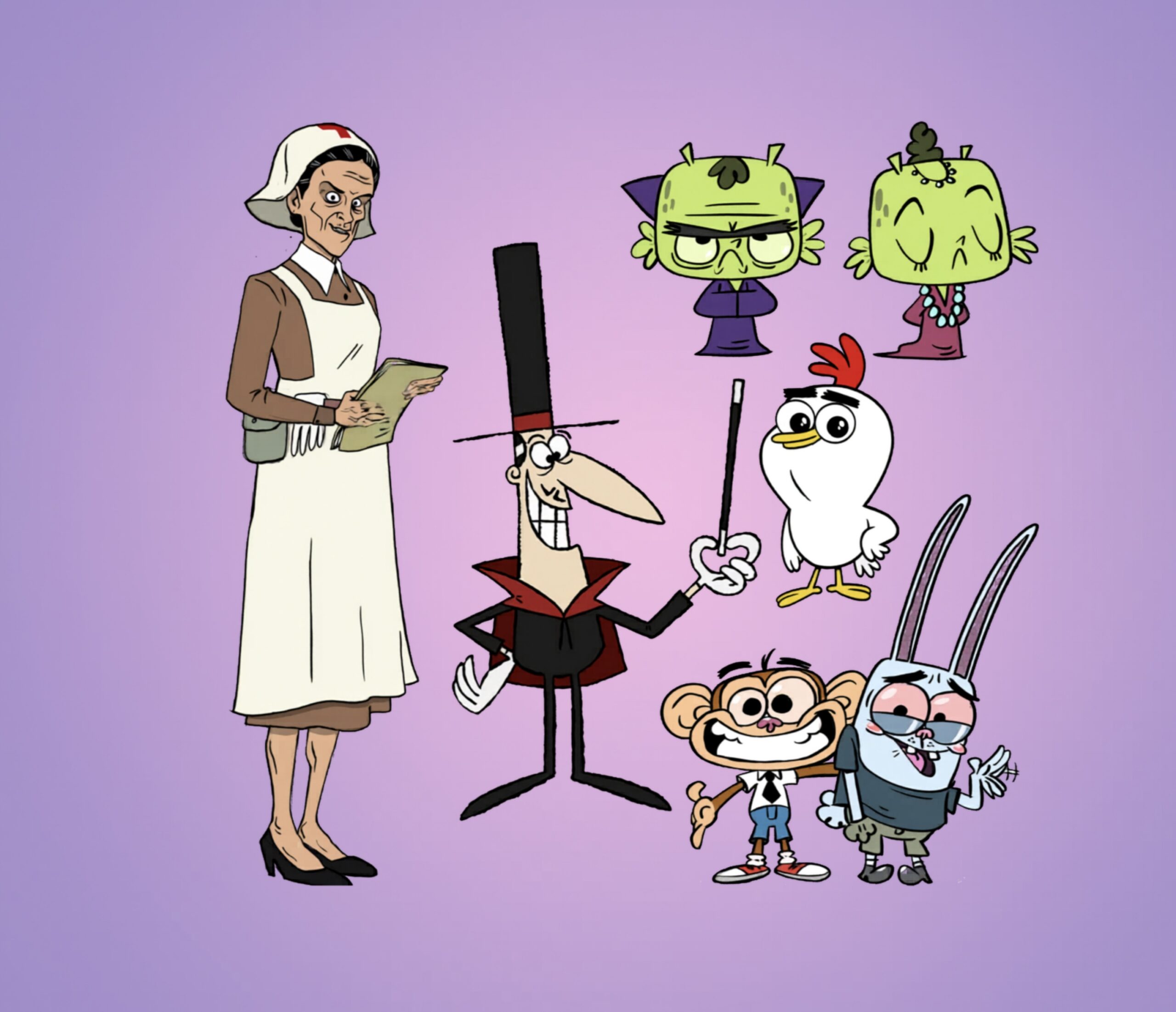
We’re back with a part 2 of our conversation with WSS’s Studio Art Director, Josh Mepham!
In part 1, Josh shared the journey that brought him to character design and the process he finds helps him the best when bringing original characters to life. Now, in part 2, he dives into the challenges of staying inspired, overcoming creative blocks, and practical tips that keep his ideas flowing and his work fresh.
Do you have any tips to help you get over a creative block?
Creative blocks happen to everyone. I don’t care how experienced you are, you’re going to hit walls it’s inevitable.
When that happens, the biggest mistake I can make is trying to force my way through it. I’ve done that. I’ll sit there thinking, “Come on, just solve it.” And the harder I push, the more frustrated I get. The drawing doesn’t improve my mood just gets worse.
So now, when I feel that resistance building, I step away.
I get up. I move. Sometimes it’s just walking around the room. Sometimes I’ll step outside and get fresh air. Physically shifting your state, especially in nature, does something powerful it resets your brain and interrupts the spiral. More often than not, the solution shows up when you’re not staring at the page.
I’ll also flip through an “Art Of” book, not to copy, but to spark something. I love revisiting artists like Jamie Hewlett or going back to classic animation books like Preston Blair’s Animation. There’s so much energy and confidence in those pages. Seeing how other artists push shapes, simplify forms, or exaggerate expression reminds me there’s always another way in.
I’ve learned that creativity isn’t a faucet you can just crank open on command. It’s more like a rhythm. If I give it space, it comes back.
And honestly, some of my best ideas have shown up the moment I stopped trying so hard.
What inspires you at WSS?
What inspires me most at Wind Sun Sky is that I’m constantly learning.
Since being here, I’ve expanded my knowledge of 3D animation and motion capture in ways I hadn’t before. It’s pushed me out of my comfort zone in a good way. I’ve always had a strong 2D foundation, but understanding 3D pipelines, mocap workflows, and how performance translates digitally has made me a stronger designer. It’s changed how I think about movement, structure, and the realities of production.
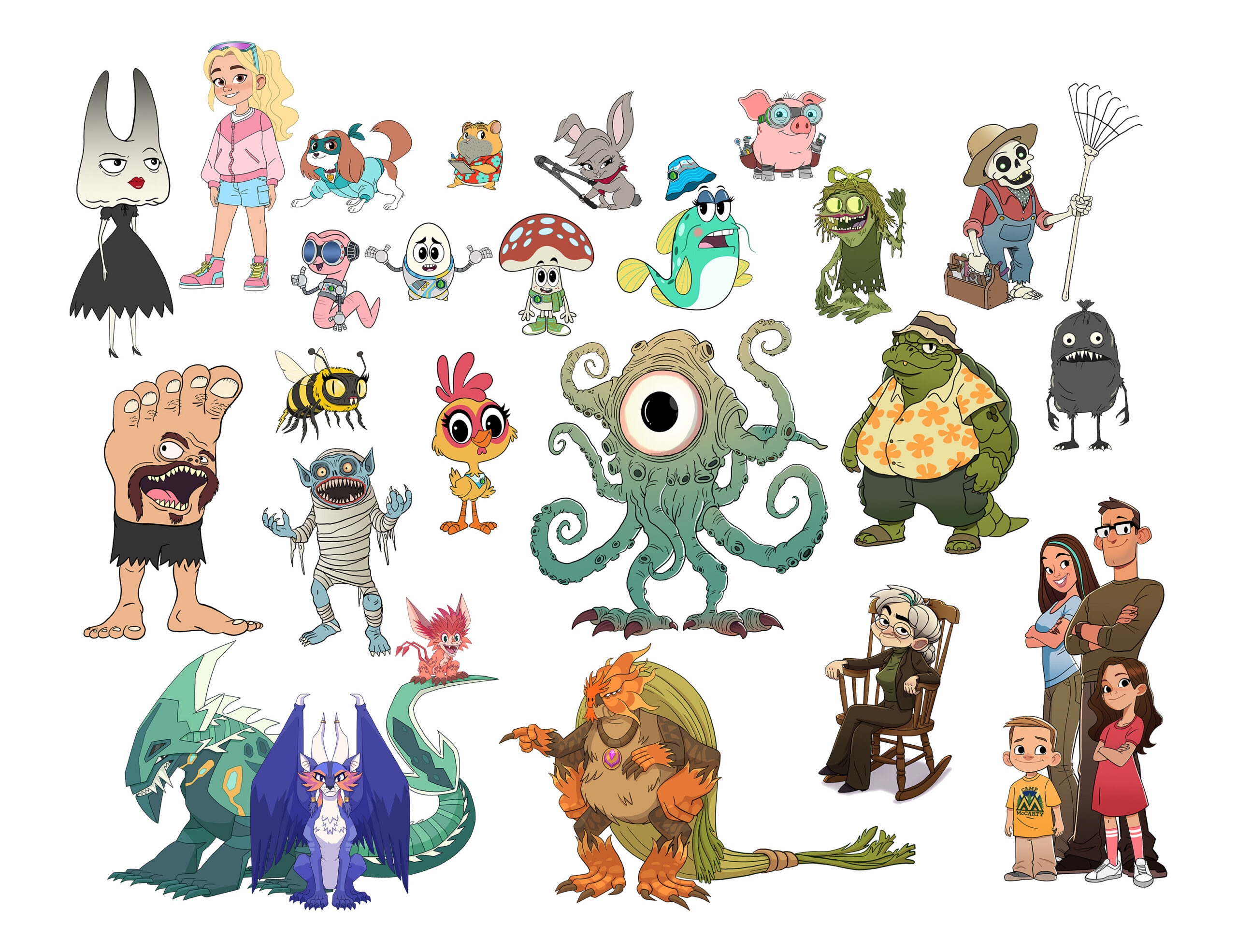
One of my favorite projects so far has been helping translate the studio’s Future Chicken universe characters from 3D into 2D. It was a big responsibility and a really satisfying challenge. It allowed me to lean into what I specialize in while respecting the integrity of the original 3D designs. There’s something exciting about distilling a dimensional, rigged character into a graphic 2D form and keeping the personality intact. It’s design translation, and I love that.
WSS has also opened my eyes to how quickly media creation is evolving. We’re not just making shows for traditional broadcasters anymore. Audiences, especially kids, are consuming content differently. It’s faster. It’s more interactive. It lives on platforms like YouTube and TikTok.
What inspires me is that we’re not resisting that shift. We’re leaning into it.
Compared to more traditional studios, WSS feels forward-thinking. We’re paying attention to where the audience actually is and building for that reality. That mindset excites me because it feels adaptable. It feels current. It feels alive.
And as a creator, I’m energized by environments that are evolving. When the industry shifts, you can either resist it or you can learn, experiment, and grow with it.
At WSS, I feel like I’m doing the latter.
What advice would you give to someone looking to become an animation artist? What makes someone successful?
Working in animation is incredible, but it’s not easy. It’s competitive. It moves fast. And it’s constantly evolving. So, if I’m giving real advice, it starts with honesty: this industry will challenge you. But if you genuinely love it, it’s worth it.
One big thing I tell people right now is: don’t ignore AI.
You don’t have to love it. But pretending it’s not happening isn’t a strategy. Technology is evolving whether we like it or not. The smarter move is figuring out how to use it as a tool. Not a crutch, not a replacement for creativity or humans, but a tool. I think about Ted Sarandos’ quote: “AI is not going to take your job, but someone using it will.” To me, that’s not about abandoning craft. It’s about staying adaptable.
Another piece of advice? Don’t be too picky early on.
Be open. You might start somewhere unexpected. You might take a role that isn’t your dream job. That’s okay. Every experience builds skill, resilience, and relationships. Be positive. Be collaborative. And don’t be overly possessive about work you’re doing for a studio. You’re contributing to something bigger than yourself.
The art you want full ownership over? Make that on your own time.
That balance matters. Professionally, you’re serving a shared vision. Personally, you should still be creating things that are purely yours.
When it comes to portfolios, keep it tight. Only show your strongest work and the pieces that represent what you do best. Don’t pad it. Quality always beats quantity. Most art directors can tell within the first few pieces whether someone has clarity and skill.
And honestly, success in animation isn’t just about drawing well. It’s about communication, resilience, and being someone people want to work with. Talent gets you noticed. Attitude keeps you employed.
Stay curious. Stay adaptable. Keep refining your craft. That’s how you give yourself a real shot.
That’s a wrap on our talk with our inspiring Art Director Josh on character design and career considerations!
We hope both part 1 and part 2 gave everyone some helpful insights and advice when it comes to the world of animation! Stay tuned for more interviews with our amazing creatives by signing up to our newsletter or following us on socials.